
Pennsylvania
Competitive statewide and in the Philadelphia suburbs, where several House toss-ups sit. Both chambers can turn on how those collar counties break.

Midterm coverage — updated through October 2026
The 2026 midterm elections will decide control of the House and, likely, the Senate. This page tracks the map, the toss-up races, turnout, and the messaging that will shape the outcome. Updated as the cycle develops.
Two chambers, one ballot. The House turns on a small set of districts. The Senate turns on a small set of states. Both have been close enough that small shifts — a retirement, a court ruling on a map, a turnout gap between age groups — can move the majority.
Midterm outcomes rarely match the national polls, because the districts that decide control are not national.
That is the whole reason this page is organized by map, district, and turnout rather than by a running national scoreboard.
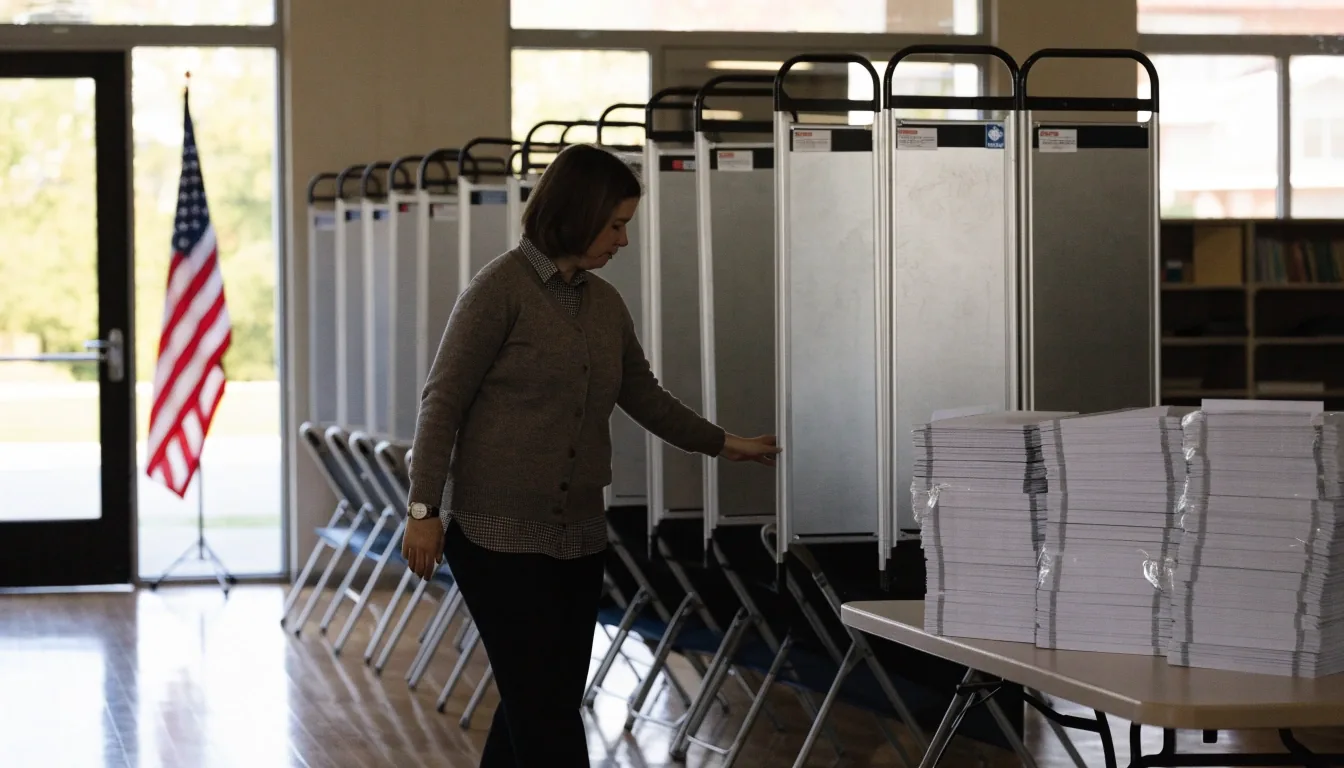
Control of the House runs through a few dozen districts, not the national popular vote. Many of them are suburban seats that swung between parties in 2018, 2020, and 2022. Candidate quality matters more here than almost anywhere else: a strong recruit can hold a seat that the national mood says should flip. The size of the Republican majority after 2024 sets how many seats Democrats need to take back the gavel.
Practically, that means watching how many toss-up districts each party is defending. A party forced to spend money holding seats it already owns has less to spend on offense.
Start with the majority margin, then subtract the seats each party is defending in districts that already lean the other way.
An open seat is a different race than an incumbent defending one. Retirement announcements change who is competitive months before voting starts.
A candidate who matches the district's own priorities usually outperforms the party's national message there. Watch for the gap.
The Senate map is smaller and less forgiving. A handful of seats will decide the majority, and several of them are in states that are competitive at the presidential level. Incumbency, retirement decisions, and how nationalized the race becomes all shift the odds. We track seat-by-seat rather than calling a national number, because the Senate doesn't work that way.
Because there are far fewer races, one bad week in a single state can move the whole chamber. That makes the Senate less responsive to a national trend and more responsive to individual campaigns, candidate backgrounds, and how much outside money lands in one media market.
Read the policy explainersPennsylvania, Georgia, Arizona, Michigan, Wisconsin, and Nevada are the states most likely to decide both chambers. Within them, the toss-up districts cluster in suburbs and exurbs outside major metros. North Carolina and Ohio matter for the Senate but less so for the House map. Where a state sits depends on which chamber you're talking about.
Competitive statewide and in the Philadelphia suburbs, where several House toss-ups sit. Both chambers can turn on how those collar counties break.
Senate and House both matter here. Atlanta-area districts decide the House side, and the statewide result will be read closely as a turnout story.
A fast-growing suburban electorate that has moved between parties recently. Early voting rules and county administration vary, so timing matters.
Toss-up House districts around Detroit and a statewide Senate race that will test how crossover voters in the suburbs behave this cycle.
Consistently close statewide, with a House map where a couple of districts sit right on the line between safe and competitive.
One of the few states where both a Senate seat and a House toss-up sit on the same ballot. Turnout in the Las Vegas metro does a lot of the work.
A Senate race that will be read nationally, with less House exposure than the states above. Still worth watching for turnout patterns.
Senate-focused this cycle. Its House map is not where the majority math is decided, but the Senate result will shape how the state is read for 2028.
A toss-up district is one where neither party has a structural advantage going in. These are the seats where turnout, local issues, and candidate quality decide the outcome. Many are suburban, college-educated, and split their tickets. Watching how many toss-up districts a party has to defend tells you more about the cycle than any single poll.
A useful habit: count defense before you read offense. If a party has to protect a long list of districts it won narrowly last time, that list is a better guide than a headline about national momentum.

Voters who pick one party at the top and another down-ballot decide most of these seats. They respond to local conditions more than national messaging.
Districts decided by a few thousand votes are where a retirement, a scandal, or a late outside investment changes which party holds the seat.
Reading the returns
Turnout is the variable every campaign tries to move and no one can fully predict. Early voting data tells you who has already voted, not who will win. In midterms, turnout is usually lower than in presidential years, and the drop-off is uneven across age and education groups. That unevenness is why midterm outcomes often surprise people who only read national polls.
Treat early voting numbers as one input. They can show enthusiasm and scheduling, but they cannot tell you how a late-deciding voter will break. Compare the shape of this cycle's turnout with 2022 before drawing conclusions.
Swing voters
Crossover voters, people who vote for one party at the top of the ticket and the other down-ballot, are the swing group in most toss-up districts. They tend to be college-educated, suburban, and focused on local conditions over national messaging. How both parties talk to them will decide a lot of races. If you want to see this in action, the New Jersey and Virginia governor races on our Election Watch page are the clearest tests.
Follow the governor races
Redistricting maps in several states are still being litigated, and a ruling can shift which districts are competitive before the cycle even starts. A map that moves four seats from safe to toss-up changes the math for both parties. We track the cases that affect the map, not just the ones that make headlines. Ballot access and election administration rules are also in flux in some states.
When a map changes, the recruiting calendar changes with it. Candidates who were planning one district may find themselves in another, and party committees have to start over. That is why a court ruling can matter more than a month of polling.
Parties win toss-up districts with candidates who fit the district, not the national brand. Recruitment failures, scandals, and retirement decisions can flip a seat before a single vote is cast. We flag when a race's fundamentals change because of who's running, not just because of a poll. That's often the most useful signal in a midterm cycle.
Both parties will try to make the midterms a referendum on the sitting president. Whether that works depends on the district. In safe seats it fires up the base; in toss-up districts it can cut either way. Watching how candidates in competitive races talk about national issues tells you what their internal polling says.
A candidate who quietly stops repeating the national line is telling you the district does not want it. That move usually shows up before any poll does.

The 2026 cycle is the first full midterm of Trump's second term, and it will show how durable his coalition is in the suburbs and among crossover voters. It will also show whether the Democratic response, from messaging to candidate recruitment, resonates beyond the base. The results will set the terms for the next presidential cycle.
One practical way to read the night: compare how competitive districts break with how safe districts break. A gap between them tells you more about the next four years than the national total does.
Track the key figures shaping the cycleShort answers to the questions readers send us most often. If yours is not here, our reporting desk reads every tip.
Both are in play. The House turns on a few dozen toss-up districts, and the Senate map runs through a small set of competitive states. We track it as it develops rather than calling it early.
Pennsylvania, Georgia, Arizona, Michigan, Wisconsin, and Nevada for both chambers, with North Carolina and Ohio mattering more for the Senate. The toss-up districts cluster in the suburbs of major metros.
It tells you who has voted, not who will win. Turnout patterns can signal enthusiasm, but midterm drop-off is uneven across age and education groups, so read it as one input, not a forecast.
It depends on the district. In safe seats he fires up the base; in suburban toss-up districts his agenda can cut either way. Watch how candidates in competitive races talk about him.
This page is updated as the cycle develops — new toss-up calls, map rulings, and turnout data land here first. If you want the surrounding reporting, start with the pages below, or send our desk something we should be looking at.