
Election Watch
State races and mood tests
State-level and off-year contests often tell you more about the national mood than any poll. Election Watch tracks the governor races, the turnout patterns, and the crossover voters that shape what comes next.
Off-year results are a signal, not a verdict
Off-year and state-level contests are the clearest tests of how voters feel about national politics. They turn out fewer people than presidential races, which means the voters who show up are often the most engaged. That makes them a useful signal, not a perfect one. Watching how they break tells you which way the political wind is blowing in a specific state.
The New Jersey governor race
New Jersey's governor race features Mikie Sherrill, the Democratic nominee, in a campaign framed as part of the anti-Trump backlash. The state's suburbs and college-educated voters are central to her path. Whether national framing lands in a state race is the key question.
New Jersey is also a state where turnout patterns shift quickly, so early-voting data is worth watching closely. Compare the pace of returned ballots to the last comparable cycle and read the county-level detail before drawing conclusions from a statewide number.
What to watch in the state
- — Suburban share of the vote
- — College-educated turnout
- — Early-voting composition
- — Whether national framing lands locally

The Virginia governor race
Virginia's governor race features Abigail Spanberger, a major Democratic figure whose campaign tests moderate appeal in a purple state. Her race is often used to gauge whether pragmatism still wins in a polarized electorate. Virginia's suburbs, particularly in the northern part of the state, are the swing territory.
The result will shape how both parties think about purple-state strategy. A campaign that wins on local issues without adopting the loudest national argument gives the other side a read on what to copy and what to drop.
Purple-state strategy, in one line
A moderate win in a purple state tells both parties which message actually travels.

Crossover voters and the suburbs
Crossover voters decide races in both states. They tend to be college-educated, suburban, and focused on local conditions over national messaging. In New Jersey and Virginia, the suburban vote is large enough to swing an entire race. How both parties talk to these voters is the main variable to track.
Who they are
Suburban, college-educated, and not locked to one party. Many vote in every cycle, which makes them easier to find in early-voting files.
What moves them
Property taxes, school funding, transit, and local services tend to rank above national framing in these districts.
Why they matter
In both states the suburban share is large enough to turn a close race. Lose it by a few points and the statewide math changes.
Turnout and early voting
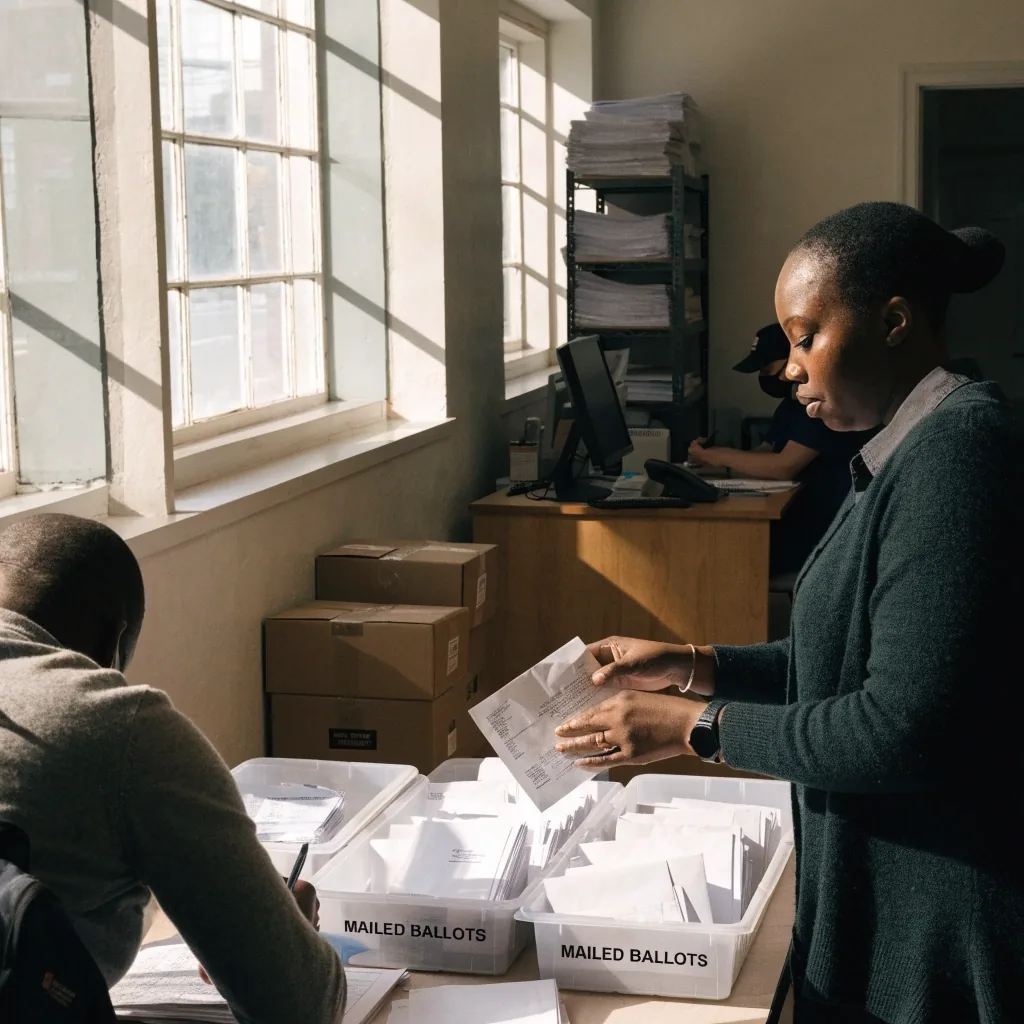
Early-voting figures describe who has already cast a ballot. They do not describe who will win.
Ballots returned
A running count of who has voted early. Useful for pacing, not for predicting a winner.
Electorate makeup
The composition that matters: how many young voters, suburban voters, and crossover voters actually show up.
Comparison cycle
Compare turnout against the last comparable off-year contest to see who showed up and who stayed home.
What it cannot say
A surge in early votes can mean enthusiasm or simply a change in habit. Read the party and county mix before reading the mood.
What these races signal for 2026
The governor races are the last major contests before the 2026 midterms, which makes them a preview. A strong Democratic showing in both would reshape party expectations for the House and Senate map. A split result would suggest the national mood is more complicated than either party claims. Either way, the takeaways will shape messaging going into the midterms.
Both states break one way
Party expectations for the House and Senate map reset around a single story.
They split
The national mood reads messier than either party's talking points allow.
Follow the midterms map as the picture firms up
State elections beyond the governor races
Governor races get the attention, but state legislative and down-ballot contests also matter. They shape redistricting, election administration, and the pipeline of future candidates. A party that wins state legislatures controls the map for the next decade. Watching down-ballot results tells you which party is building long-term power, not just winning the news cycle.

Redistricting
Legislatures draw the district lines that decide the next decade of House seats. The winners in state races get the pen.
Election administration
State officials write the rules on registration, mail ballots, and certification. Those rules decide how smoothly the next cycle runs.
Candidate pipeline
State legislators are where Senate and gubernatorial candidates usually come from. Down-ballot wins build the bench.
Local ballot questions
Bond measures and local referenda pull different voters to the polls and can shift turnout in ways that show up in the statewide totals.
How to read the results
Read the margin
Read the margin, not just the winner. A narrow win in a state that should be safe is a signal; a comfortable win in a toss-up state is a bigger one.
Compare turnout
Compare turnout to the last comparable cycle to see who showed up. The same margin on a bigger electorate means something different.
Hold the takeaways
Be cautious about national takeaways from a single state result. Two races rarely tell one clean story on their own.
See how the policy fights behind these races fit together
Questions readers send us
The same three questions come up whenever a state race gets national attention. Here is how we answer them.
Have something we should look at?
We read every tip that comes in. Send documents, local context, or a pointer to a race we should be tracking.
Send a news tipWhich state races matter most this cycle? +
The New Jersey and Virginia governor races are the clearest tests of national mood before 2026. State legislative and down-ballot contests also matter because they shape redistricting and election rules.
How much do early voting numbers tell us? +
They tell you who has already voted, not who will win. What matters more is the composition of the electorate and whether turnout patterns match the last comparable cycle.
Why do crossover voters matter so much? +
In suburban toss-up districts and purple states, they are the group that decides races. They tend to vote local over national, so how parties talk to them is the main variable.

Keep watching with us
Reporters, editors, and readers on the same page
Gustrion covers U.S. politics from Washington, DC. We publish explainers on the 2026 midterms, profiles of the figures shaping the races, and the state-level results that test the national mood. If you want to know how we work before you trust what we publish, start with our standards.
Newsroom inquiries: [email protected] · +1 202-496-1055 · 1201 Pennsylvania Avenue NW, Suite 400, Washington, DC 20004 · Monday to Friday, 9:00 AM – 6:00 PM ET