
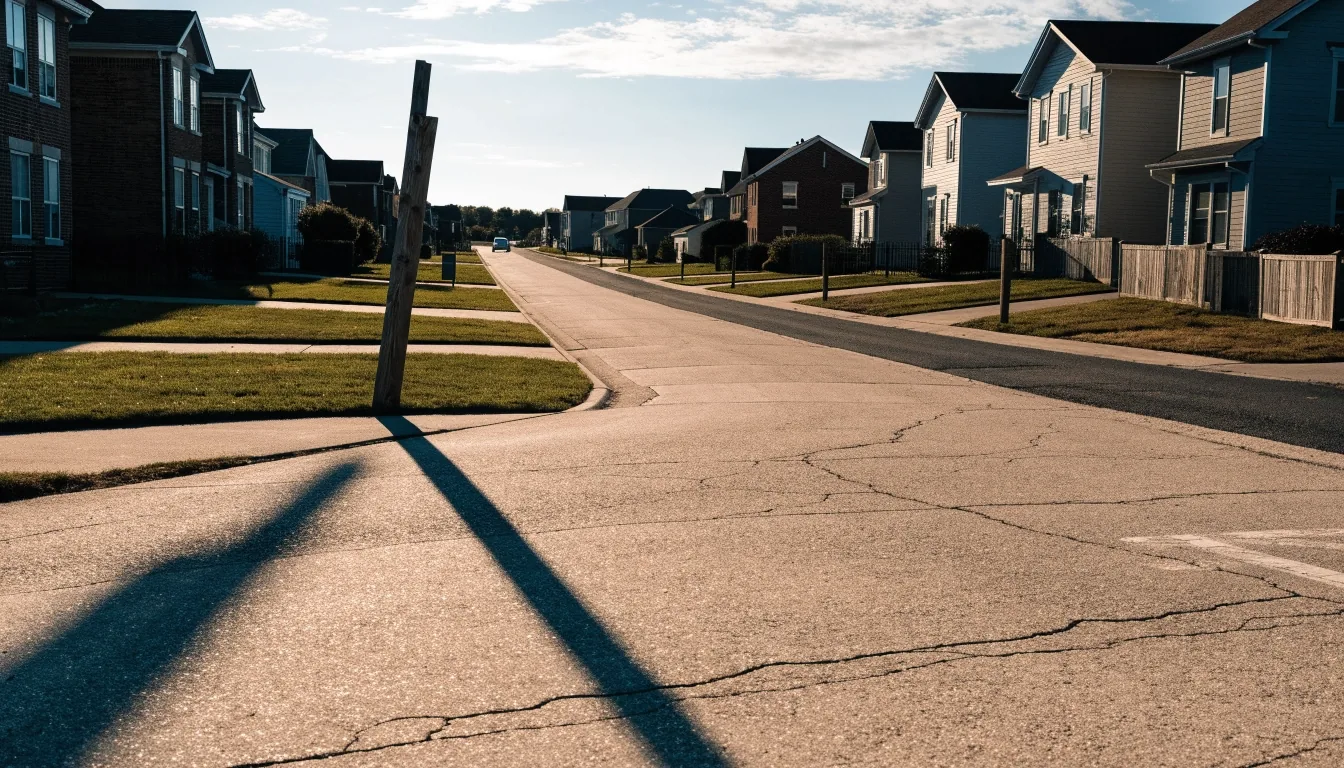
Suburban toss-up districts
A small set of House seats in places like Pennsylvania, Georgia, Arizona and Orange County will decide the majority. Crossover voters there split their tickets more than the national map suggests.

Washington, D.C. — Monday, October 12, 2026
Gustrion is a political news and analysis publication built for readers who want the day's developments without the shouting. We cover the 2026 midterms, the figures driving the conversation, and the policy fights that decide who holds power in Washington.
The 2026 midterm cycle is the center of gravity in U.S. political coverage right now. Every House seat and roughly a third of the Senate is on the ballot, which means control of both chambers is genuinely in play. President Donald Trump's second-term agenda, from executive actions to immigration enforcement to federal spending, sets the terms of the fight. That combination, a sitting president with an active agenda and a Congress up for grabs, is what makes this cycle unusually charged.
435
House seats up for election across every state and district.
33
Senate seats in cycle, enough to decide the majority.
Two chambers, one cycle. Where the map is tight, a handful of districts and states carry the outcome.
Control of both chambers is genuinely in play.
A sitting president pushes an agenda. A Congress fights for its majority. That collision is what the 2026 midterms decide — and it is why this cycle reads differently from an ordinary off-year.
The House majority and Senate control are the two prizes. The House flips on a few dozen toss-up districts, many of them in the suburbs of Philadelphia, Atlanta, Phoenix, and Orange County. The Senate map runs through a smaller set of states where a handful of seats will decide the gavel.
Turnout, candidate quality, and how nationalized the messaging becomes will matter more than any single national poll this far out.
Read the 2026 Midterms coverage
A small set of House seats in places like Pennsylvania, Georgia, Arizona and Orange County will decide the majority. Crossover voters there split their tickets more than the national map suggests.

Fewer states, higher stakes. A handful of competitive seats decide the gavel, which is why the map is tracked state by state rather than called early.

Gavin Newsom governs California while building a national profile. Mikie Sherrill is the Democratic nominee in New Jersey's governor race, and Abigail Spanberger is the Democratic figure to watch in Virginia's. Joe Biden's record remains a reference point both parties use in their messaging.
Outside elected office, Joe Rogan's podcast reaches an audience that candidates actively court. Our Key Figures page profiles each of them with the facts that matter and the context behind the headlines.
See key political figuresGavin Newsom
Governor of California, building a national profile while running the country's largest state.
Mikie Sherrill
Democratic nominee in New Jersey's governor race, a contest read as a national mood test.
Abigail Spanberger
The Democratic figure to watch in Virginia's governor race, another off-year bellwether.
Joe Biden
His record remains a reference point both parties use in their messaging this cycle.
Executive actions get challenged in court within days. Redistricting maps in several states are still being litigated and could shift the playing field before 2026. Immigration enforcement, federal spending decisions, and election administration rules are all active fronts. These aren't side stories. They determine what candidates can promise and what they can actually deliver.
Orders signed in Washington are often tested in federal court within days, which sets the practical limits on what an administration can deliver before the next election.
Several states are still arguing over how district lines are drawn, and a ruling in one of them can move a seat from safe to competitive before ballots are cast.
Immigration enforcement, federal spending decisions and election administration rules are active every week, shaping both the campaign message and what a winning candidate can actually do.
Off-year and state-level contests often tell you more than national polling. The New Jersey and Virginia governor races are the clearest tests of how voters feel about Trump-era politics and the Democratic response.
Crossover voters in the suburbs, particularly college-educated ones who split their tickets, will decide both. Election Watch tracks these contests and what they signal for 2026.
Track state races
New Jersey governor race
The Democratic nominee faces a contest read nationally as a verdict on the party's direction entering 2026.

Virginia governor race
Crossover suburban voters, particularly college-educated ones, are the bloc both campaigns need most.
We lean on wire-service reporting, court filings, official election data, and direct sourcing. Reuters and CNN Politics are among the outlets we reference for straight-news baselines, and we say so when we do. We separate news from analysis and label opinion clearly. If we get something wrong, we correct it and note the change.
Our How We Report page lays out the standards in full, including how corrections and tips are handled.
Read our editorial standardsPolling this far from Election Day is a temperature check, not a forecast. Early voting data tells you about turnout patterns, not outcomes.
What actually moves races: candidate quality, fundraising, local conditions, and whether a national message lands in a specific district. We flag when a poll is an outlier and when a trend is real. That distinction is most of the value in political coverage.
A poll is a snapshot
One survey on one day measures sentiment, not momentum. We compare against the trend before we treat it as news.
Early votes are turnout data
They show who is voting and how, not who wins. Both parties read them differently until the full count arrives.
Daily news is noisy. A single gaffe, a single court ruling, a single poll can dominate a news cycle and mean nothing by the next one. The things that hold up over a cycle are structural: the map, the money, the incumbents, and the issues voters name when you ask them directly. Gustrion is built to help you tell the difference between the two.
Noisy by nature
Hourly developments, competing interpretations, and a story that resets before lunch. Most of it fades within days.
Structural by habit
The map, fundraising totals, incumbency and the issues voters name themselves are the signals that survive a news cycle.
Our job here
Sort the two, and say plainly which is which. That is the reason this publication exists, and it is why the front page is organized the way it is.
Every page is organized so you can get the fact you need and move on. Headlines state the development. Sections give the context. No autoplay audio, no pop-ups between you and the text.
Five minutes
The front page gives you the shape of the day
What moved, what it means, and which chamber it affects. Read in order, or jump straight to the section you need.
One hour
The explainers go deeper
Profiles, policy walk-throughs and state-level tracking for readers who want the full context behind the day's developments.
When we're wrong, we say so. Corrections appear on the article and in a running log. We don't quietly edit a story to erase a mistake.
If you spot an error, the contact page has a direct route to the editorial team, and tips are welcome too. Political coverage earns trust by being correctable, not by being confident.
Gustrion is written for readers who follow politics closely, professionals in policy and advocacy, and voters who want more than a headline. We assume you can handle nuance and don't need every story explained from scratch.
No party line, no both-sides theater. Just the facts and the context that helps you place them.
Editorial desk
1201 Pennsylvania Avenue NW, Suite 400, Washington, DC 20004, United States
Monday to Friday, 9:00 AM – 6:00 PM ET
It's genuinely in play. The House turns on a few dozen toss-up districts, and the Senate map runs through a small set of competitive states. We track the map as it develops rather than calling it early.
The Senate map runs through a handful of states with competitive seats, and the House is decided in suburban toss-up districts in places like Pennsylvania, Georgia, Arizona, and California. Our Midterms page tracks them by state.
Less than the headlines suggest. Polls are a temperature check, and early voting tells you about turnout patterns, not outcomes. Candidate quality, money, and local conditions matter more.
Yes, and it's labeled as analysis or opinion. News pages stay news.
The front page gives you the shape of the day. The explainers, the map, the figures, and the rules behind the fights are all one click away — and everything is written to be read in minutes, not skimmed past.